In early May of 2026, Ralston College convened with renowned thinkers and scientists for a symposium entitled AI and the Battle for the Soul.
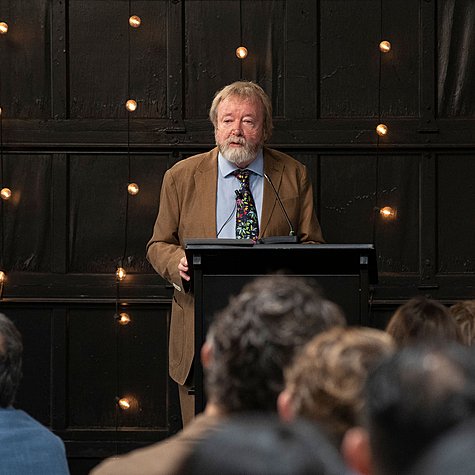
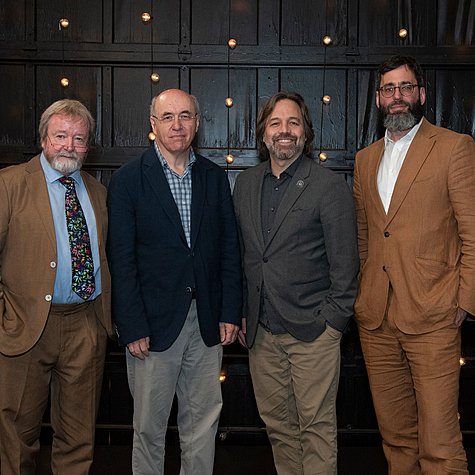
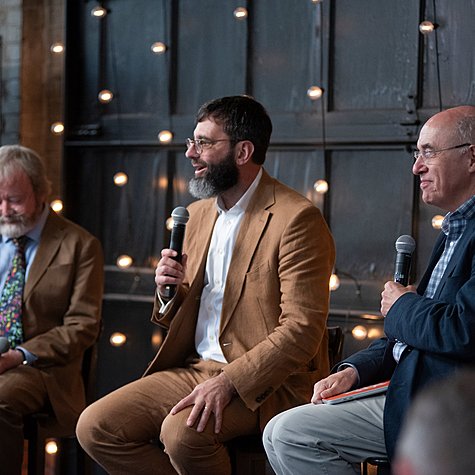
This day-long gathering confronted some of the most pressing questions facing technological advancement, education, and ultimately, civilization itself. Before sharing the stage with theologian Jonathan Pageau and physicist Stephen Wolfram, Dr Iain McGilchrist opened the event with the first of two lectures: Do We Really Understand Understanding?
As a renowned neuroscientist and philosopher, his work on the divided brain has transformed contemporary discussions of consciousness, attention, and meaning. By tracing a line of questions concerning the nature of intelligence, embodiment, wisdom, and the soul in an age increasingly defined by mechanistic thinking and the rise of large language models, Dr McGilchrist challenges reductionist accounts that diminish human consciousness to mere information processing. Moving beyond the computational framework, he draws on neuroscience, literature, theology, music, and myth to invite us to recognize the expansive and irreducible nature of our humanity.
He reminds us of the importance of the body, drawing on Wittgenstein’s notion that “the human body is the best picture of the human soul.” Intelligence, he argues, is necessarily embodied, taking place within a complex environment that relies upon much of what is unconscious, intuitive, or procedural. Within this very substrate reside ends or purposes that exceed what we are as individuals. By this same token, suffering requires embodiment and, while it may not be something we seek out, it plays a profound role in the fulfillment of a human life and may ultimately arrive as a gift. Through paradox and questioning, Dr McGilchrist examines the aspects of human nature that are irreducible to mechanism, helping us to see beyond the limits of computation toward the deeper realization that a civilization unable to distinguish information from wisdom may ultimately lose sight of what it means to be human at all.
If you would like to support us in this work, please visit ralston.ac/donate.