MA
IN
THE
HUMANITIES

Applications for the 2027/28 cycle open September 15th. 

How to apply
We
are
seeking
extraordinary
students
to
do
the
hard
thinking
our
time
demands.
 Rembrandt

Overview

Ralston College’s MA in the Humanities charts its course through Western civilization, from the Greek world of Homer, through Ancient Rome and Medieval Europe, into the Renaissance and up to our modern era. The setting of our four terms parallels this arc by beginning in Greece and then moving to Savannah, Georgia. The curriculum unites the most profound and provocative works of literature, philosophy, and art, inspiring and challenging students to approach the human condition with fresh eyes. Yet to cover this ground in a single year of intense intellectual study requires careful steering and selection.For 2027–28, that focus will be provided by the theme of  “the Self”, a subject that our multidisciplinary curriculum will trace through philosophy, music, architecture, art, and literature. At the core of Western tradition and every human heart lies the question of who we are, how we are formed, and what we are for. By entering this question deeply, students will be invited to see themselves, and those around them, with greater clarity and wonder. 

Program Structure

Term
I:
Greece

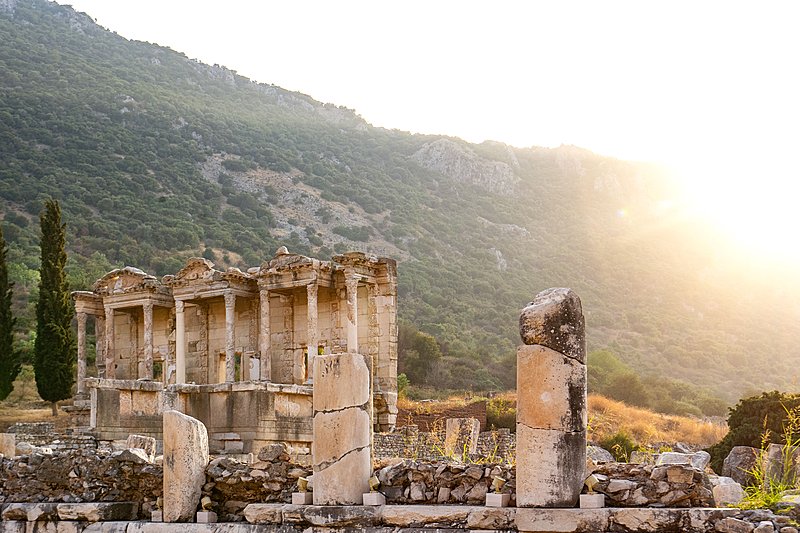
The Greek language and the spirit of Hellenism are the longest threads that run through the humanities, in all of their forms, as expressed across every epoch of the Western tradition. Within that inheritance, the question of what it means to know oneself and to become fully human stands at the beginning of the Western pursuit of wisdom.  

For centuries, the ability to access the foundational texts of this inheritance directly—without translators, commentators, or any other intermediaries—was a nearly universal prerequisite for the meaningful encounter with, and entry into, its cultural inheritance. It is for this reason that our program begins with an intensive language residency in Greece.

This innovative pedagogical module, which approaches every form of the Greek language simultaneously, enables the study of Greek texts over the three subsequent terms. Undertaking this ambitious project in Greece itself not only allows for complete linguistic and cultural immersion, but also helps forge deep friendships through communal life and group excursions to some of the major ancient sites of the Hellenic world.

 jason blackeye kAOyHb6lagg unsplash
 Screen Shot 2024 11 22 at 5 44 45 PM

Terms
II,
III,
IV:
Savannah

Three terms in Savannah will then follow: we will focus first on the Greco-Roman era, then turn to the Middle Ages, and finally consider a range of cultural masterpieces from post-medieval Europe through to our modern world. We will explore how not only the Self but several profound themes that animate the Western tradition develop and unfold across time by considering works of philosophy, theology, and the creative and imaginative arts. 

Intense scrutiny of specific works will be paired with ambitious, wide-ranging surveys. We will supplement our studies with concerts, symposia, guest lectures, and other events that will enrich our main curricular program. Taken together, the academic itinerary of these terms and their chronological sequence will provide integrated knowledge—and experience—of the West’s intellectual, spiritual, and historical trajectory.

Our
MA
Students'
Own
Words

Explore the intellectual journeys of four recent graduates of our MA in the Humanities program. In the following videos, students reflect on why they enrolled at Ralston, what they learned, and those they met along the way, revealing how the College's curriculum spoke uniquely to their circumstances and interests.

Theme

Self

There is no more human, and no more important, goal than coming to know who we each truly are. But the journey to know the self is not easy; it is arduous, humbling, and the work of a lifetime. Yet without searching for who we are, and securing the freedoms that self-knowledge brings, we cannot turn to address the challenges of how we should live, where we belong, what we should do, and to whom we should devote the limited time and energy of our lifespan. Against our current crisis of meaning, there is no more powerful response.


The western tradition has unique and invaluable insights to questions about the self. The Ancient Greeks made the fundamental discovery that self-knowledge lies at the very heart of wisdom. Γνῶθι σεαυτόν, “Know thyself”: these two words, carved above the entrance to the Temple of Apollo at Delphi, provided more powerful guidance than the Oracle inside ever could. As Socrates, who first forced the Greeks to interrogate their lifestyles and lazy assumptions about the world, famously said, “the unexamined life is not worth living”. If we don’t ask difficult questions of ourselves, are we even truly alive?


But what does it mean to know oneself? Are we seeking to uncover our character, understand our desires, explore our consciousness, navigate our future, or something more? What is the relationship between mind and body? Is the self to be identified with the human soul? Or, if there is no soul, what becomes of the self? 


Across the centuries, these essential questions have elicited radically different positions. In charting the western tradition, our MA program will explore how ideas of the self evolved. Greek  philosophers, following the lead of Socrates and Plato, explored the various ways in which reason, friendship, habit, and virtue can shape an individual to live a better life among one’s peers. The Neoplatonists of Late Antiquity, infused with the rapid spread of Christianity, turned their focus inward, understanding self-knowledge as part of the soul’s return to its divine source. Medieval scholastic thinkers brought systematic rigor to the study of the human person, examining the union of body and soul, the powers of intellect and will, and the ultimate ends towards which human life should be ordered. The Renaissance provoked intense fascination in the individual’s self-determination, whose radical subjectivity could shape whatever world it encountered. . More modern thinkers and psychologists have complicated this picture further by emphasizing the human psyche, along with its unconscious elements, as the true seat of the self. In short, the answers are still to be debated.

How should we explore and integrate these different approaches? What assumptions about human nature – and about reality itself – determine where we look for the self, what we believe it to be, and why we think it exists at all? 

In pursuing these deep and enduring questions together, Ralston students will each undertake a personal search for self-knowledge. This is an exacting and ennobling task, calling for honesty, humility, curiosity, wonder, and the courage to follow the search wherever it may lead, even beyond the very selves we thought we knew. 

 Reflection
 Lecture in the Cave of Pythagoras, Greece.

Aims

While this MA year prepares students for further advanced study and careers in a wide range of fields, it aims at something more fundamental still: to provide its participants with the depth of knowledge, analytical acuity, and enriched imagination that form the basis for both individual flourishing and the renewal of our culture at large. Indeed, the intellectual effort that this demanding program of study entails—extensive reading, intense discussion, and deep thinking—will necessarily prepare its graduates to meet the great challenges of our time. 

Every civilization needs sympathetic interpreters who are capable of cherishing the cultural treasures that form its foundations; a world in need of renewal requires a vital and synthetic vision, combining materials from different moments in new and unexpected ways. By fostering friendships with mentors and peers in the present, and with the writers, thinkers, and artists of the past, Ralston’s MA in the Humanities will help recreate the conditions of human flourishing—precisely by incorporating its graduates into the very tradition which they themselves will go on to transmit.

Course Catalog

Course
Catalog

If you wish to dive more deeply into the details of applying to and studying at Ralston College, we encourage you to explore our Course Catalog. In it you will find much more information, including on the goals of the MA program, as well as admissions, assessment, vocational preparation, expectations for academic integrity and conduct, and more.

 still life with book

FAQ

Further Questions?

 dsc 0613